
Dr. Robert Elam received his PhD in 2023, the culmination of many years of hard work at UC, and after earning his BS and MS degrees.
A lifelong resident of Clermont County in Goshen, Ohio, Robert graduated from Goshen High School and then enjoyed a variety of experiences, including in radio, as a talented musician, and working different jobs to support himself. But an intense interest in learning brought Robert to college, and he enrolled in Cincinnati State Community College. He realized that he was capable of much more than others once thought possible, and he began to pursue his bachelor’s degree.
While an honors student at Cincinnati State, Robert worked on an ecological restoration project, planting native trees in Over-the-Rhine and Northside, and creating a “children’s nature playground” using native plants and trees, along with play structures.
Robert first started to work in the Culley Lab at UC in 2013, after an introduction by Dr. Jodi Shann, whose ecotoxicology class he had been taking. Robert had recently transferred from Cincinnati State, just down the road from UC. He was quite interested in bioremediation, and wanted to contribute to efforts to clean up the environment and make a difference in the world. During this time, he began to learn Latin and teach himself Greek, also immersing himself in philosophy.
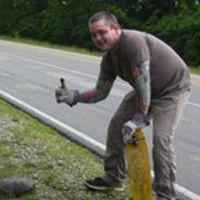
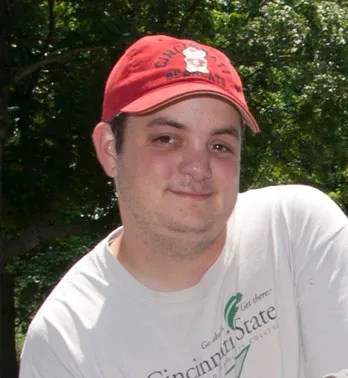
One of Robert’s first research projects was to assist Dr. Susan (Evy) Jaconis, as she was conducting her PhD research on the effects of diesel exhaust on plant growth and reproduction. Robert jumped right into the project, helping to build the testing chambers, water plants, apply the diesel exhaust, and take measurements.
Because of this research opportunity, Robert decided to apply to graduate school. Following his interest in environmental impacts, he constructed a project looking at the effect of coal dust particulates on plant growth. He successfully received his MS degree in 2017.
Eventually Robert decided that still had more to learn and forged ahead to earn his PhD degree. He opted to stay in Cincinnati because of his family, and continued on in the Culley Lab. This time though, Robert wanted to learn new techniques, so he tackled the unknown issue of why the ornamental vine wintercreeper (Euonymus fortunei) was spreading into natural areas. This involved careful observation of flowering and fruiting, seed collection, genetic analysis of seeds and adult plants, and a project examining the impact of wild vines on the arthropod community. Most importantly, Robert discovered that all wild wintercreeper plants consist of a single cultivar, the tetraploid ‘Coloratus’ cultivar, reported in the journal Invasive Plant Science and Management. He was also the first to report that wintercreeper can produce multiple embryos within a single fruit, which is now the subject of ongoing genetic research in the Culley Lab.
Dr. Elam has followed his love of learning and teaching, serving as an adjunct Assistant Professor for the Department of Biological Sciences. He has taught Introductory Biology I and II labs, as well as guest lectures in different courses. Several hundred students have now benefited from his expertise and enthusiasm for biology.
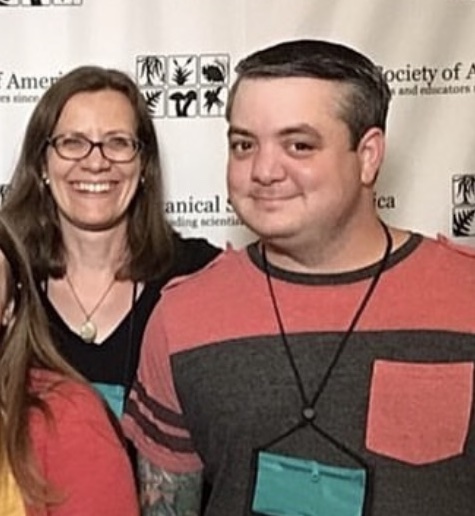
 The Culley Lab